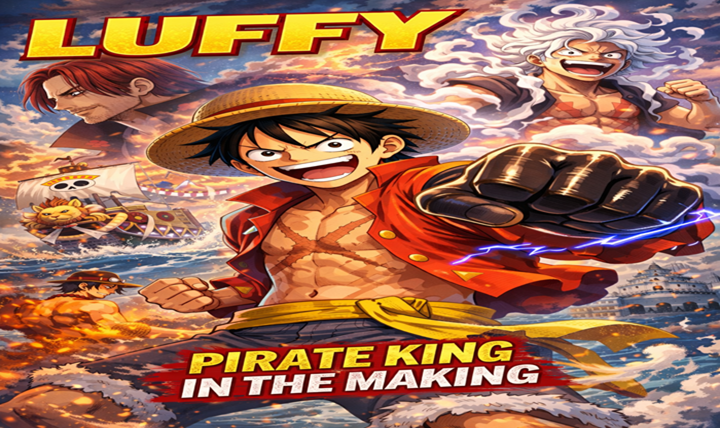
Introduction: Why Luffy Still Matters After 25 Years
When people talk about legendary anime characters, Luffy is always part of the conversation. Not because he is the smartest, the strongest from the start, or the most disciplined—but because he represents something rare: complete freedom without compromise.
Since One Piece first debuted, Monkey D. Luffy has grown alongside his audience. Fans who discovered him as kids now follow his journey as adults, and yet his message hasn’t changed. Doesn’t chase power for status. He doesn’t fight to rule others. He moves forward simply because he refuses to live under someone else’s control.
Who Is Monkey D. Luffy?
Monkey D. Luffy is the main protagonist of One Piece and the captain of the Straw Hat Pirates. He sets out to sea with a single dream: to become the Pirate King. But unlike other characters who desire thrones or domination,Definition of Pirate King is simple—the freest person on the ocean.
Born in Foosha Village in the East Blue, Grew up around pirates, bandits, and Marines. That chaotic environment shaped his worldview early. Authority never impressed him, titles meant nothing, and fear was never a reason to stop moving forward.
The Moment That Changed Everything: Shanks and the Straw Hat
Luffy’s life took a decisive turn after meeting Red-Haired Shanks. Unlike the terrifying pirates described in stories, Shanks showed that strength could exist without cruelty. He laughed, protected his crew, and accepted humiliation if it meant avoiding unnecessary violence.
The day Shanks sacrificed his arm to save permanently shaped values. Strength, in eyes, became inseparable from responsibility.
Luffy’s Personality: Simple, Honest, and Unbreakable
At first glance, seems foolish. He’s loud, impulsive, and often oblivious to danger. But beneath that simplicity is a character built on absolute emotional clarity.
Never lies about who he is. He doesn’t manipulate, strategize politically, or pretend to be noble. If he likes you, he’ll fight for you. If he doesn’t, nothing you say will change his mind.
What defines most is his refusal to abandon people who place their faith in him. Whether it’s Nami in Arlong Park, Robin at Enies Lobby, or the citizens of Wano, reacts the same way: he steps forward without hesitation.
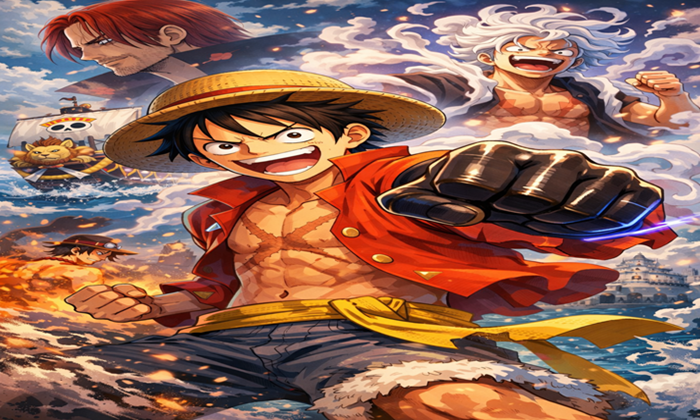
Luffy as a Captain: Leadership Without Control
Luffy’s leadership style is unusual. He doesn’t give speeches. He doesn’t assign ranks. He doesn’t even pretend to be in charge most of the time.
Yet every member of the Straw Hat Pirates willingly follows him.
Why? Because never interferes with their dreams. He doesn’t tell Zoro how to become the world’s greatest swordsman or Robin how to face her past. He simply creates a space where those dreams can survive.
Luffy’s Devil Fruit: From Joke Power to Myth
When Luffy ate the Gum-Gum Fruit as a child, it seemed almost comical. His body gained rubber-like properties, allowing him to stretch, bounce, and absorb impacts. Early on, his abilities looked more silly than threatening.
But that was intentional.
As the series progressed, it became clear that strength was never about raw damage—it was about creativity. He adapted his powers to situations, opponents, and environments. Every limitation became something to work around rather than complain about.
Later revelations about the true nature of his Devil Fruit reframed everything fans thought they knew, without invalidating the journey that came before it.
Gear Transformations: Growth Through Necessity
Luffy’s Gear techniques weren’t discovered through training alone. They were born out of desperation.
Gear Second
Developed after witnessing CP9’s speed, Gear Second pushed body beyond safe limits. It wasn’t elegant. It was survival.
Gear Third
Inflating his bones gave Luffy the power to fight giants and warships. Early drawbacks made it risky, but accepted those risks without hesitation.
Gear Fourth
This marked a major evolution. By combining Haki with elasticity, Created forms tailored to specific combat needs. Boundman, Snakeman, and Tankman all reflected adaptation rather than brute force.
Gear Fifth
Gear Fifth represents complete freedom. It breaks conventional battle logic and embraces imagination over restriction. This form isn’t just powerful—it’s symbolic of philosophy reaching its peak.
Haki: The Power of Will
While Devil Fruits provide abilities, Haki reveals character.
Luffy possesses all three forms of Haki, including the rare Conqueror’s Haki. This isn’t accidental. Conqueror’s Haki reflects a will strong enough to stand above others without demanding submission.
Doesn’t seek to dominate, but his presence alone bends the battlefield. His will clashes directly with those who rely on fear, authority, or cruelty.
Loss, Failure, and the Weight of Reality
For all his optimism, Has faced crushing loss. The death of his brother Ace during the Marineford War remains one of the most defining moments in the series.
For the first time, Wasn’t strong enough. No amount of determination could undo that failure.
Instead of breaking him permanently, it forced growth. Luffy didn’t train to become invincible. He trained to never be helpless again.
That distinction matters.
Luffy Compared to Other Shonen Protagonists
Many shonen heroes are driven by destiny, legacy, or obligation. isn’t.
He doesn’t want to save the world. He doesn’t aim to reform systems. He reacts to injustice when it stands in front of him, not because it’s his duty, but because he refuses to ignore it.
Themes Represents
Embodies several core themes that define One Piece:
Freedom without permission
Loyalty without ownership
Strength without cruelty
Joy without ignorance
Cultural Impact
Over time, Has become more than a fictional pirate. He represents an idea that resonates across cultures: the right to live authentically.
From manga sales to global exhibitions, Influence extends far beyond anime fandom. He is recognized as one of the most important characters in modern Japanese storytelling.
Why Luffy Continues to Inspire
Inspires because he never changes his core values, even as the world around him grows darker and more complex.
The Road Ahead
As One Piece approaches its final chapters, Luffy stands closer than ever to his goal. But the destination has never been the point.
What matters is that he reached this moment without betraying who he was at the start.
Conclusion: Place in Anime History
Isn’t perfect. He’s reckless, stubborn, and emotionally blunt. But that honesty is exactly why he endures.
In a genre full of chosen ones and grand destinies, Stands apart as someone who simply refuses to bow.