Introduction
Some styles whisper. Punk fashion screams — and that’s exactly the point. Born from frustration, creativity, and a refusal to conform, punk has been one of the most electrifying and enduring visual movements in fashion history.
Whether you’re drawn to leather jackets and safety pins, ripped fishnets and bold graphics, or the raw energy of DIY customization, this guide gives you everything you need to understand, build, and own a punk fashion look that’s authentically yours. From its underground origins to its 2026 street style revival — let’s break down the style that never sold out.
What Is Punk Fashion?
Punk fashion is a style rooted in rebellion, anti-establishment values, and unapologetic self-expression. It emerged in the mid-1970s alongside the punk rock music movement in the UK and US — visually embodying the anger, energy, and anti-conformity of bands like the Sex Pistols, The Clash, and the Ramones.
Unlike trend-driven mainstream fashion, punk was never about fitting in. It was — and still is — about deliberately standing apart, challenging norms, and using clothing as a form of protest and identity.
According to Wikipedia’s overview of punk fashion, the style draws from a wide range of influences including skinhead culture, glam rock, fetish wear, and working-class aesthetics, blending them into something wholly confrontational and creative.
The History of Punk Fashion
Understanding punk fashion means understanding where it came from — and why it looked the way it did.
1970s: The Origin
Punk fashion exploded in London and New York between 1975 and 1979. Vivienne Westwood and Malcolm McLaren’s King’s Road boutique — known at various times as “Let It Rock,” “Too Fast to Live, Too Young to Die,” and “SEX” — was ground zero for punk’s visual language.
The look was deliberately offensive to mainstream sensibilities:
- Torn and safety-pinned clothing
- DIY slogans written on shirts in marker or paint
- Tartan bondage trousers
- Ripped fishnet stockings
- Mohawks and brightly dyed hair
- Heavy black eyeliner and pale foundation
This wasn’t accidental — it was a calculated middle finger aimed at consumer culture, class structures, and the polished rock-star aesthetic of the era.
1980s: Hardcore and Subgenre Splits
As punk evolved in the 1980s, it splintered into subgenres — each with a distinct visual identity. Hardcore punk in the US leaned toward military surplus, band shirts, and shaved heads. Post-punk took a darker, more gothic direction. Glam punk kept the theatricality but amplified it.
1990s to Today: Mainstream Absorption and Revival
Punk fashion experienced waves of mainstream absorption through the 1990s and 2000s — appearing in high fashion runways and mainstream retail. But every time it was “commercialized,” a new underground wave pushed back.
In 2026, punk fashion is experiencing one of its most vibrant modern revivals — showing up on street style feeds, high fashion catwalks, and in the wardrobes of a new generation who discovered the aesthetic through social media. This energy shares strong DNA with grunge fashion, another anti-establishment style movement that continues to influence modern dressing.
Core Elements of Punk Fashion
What does punk fashion actually look like? These are the defining building blocks of the aesthetic.
The Leather Jacket
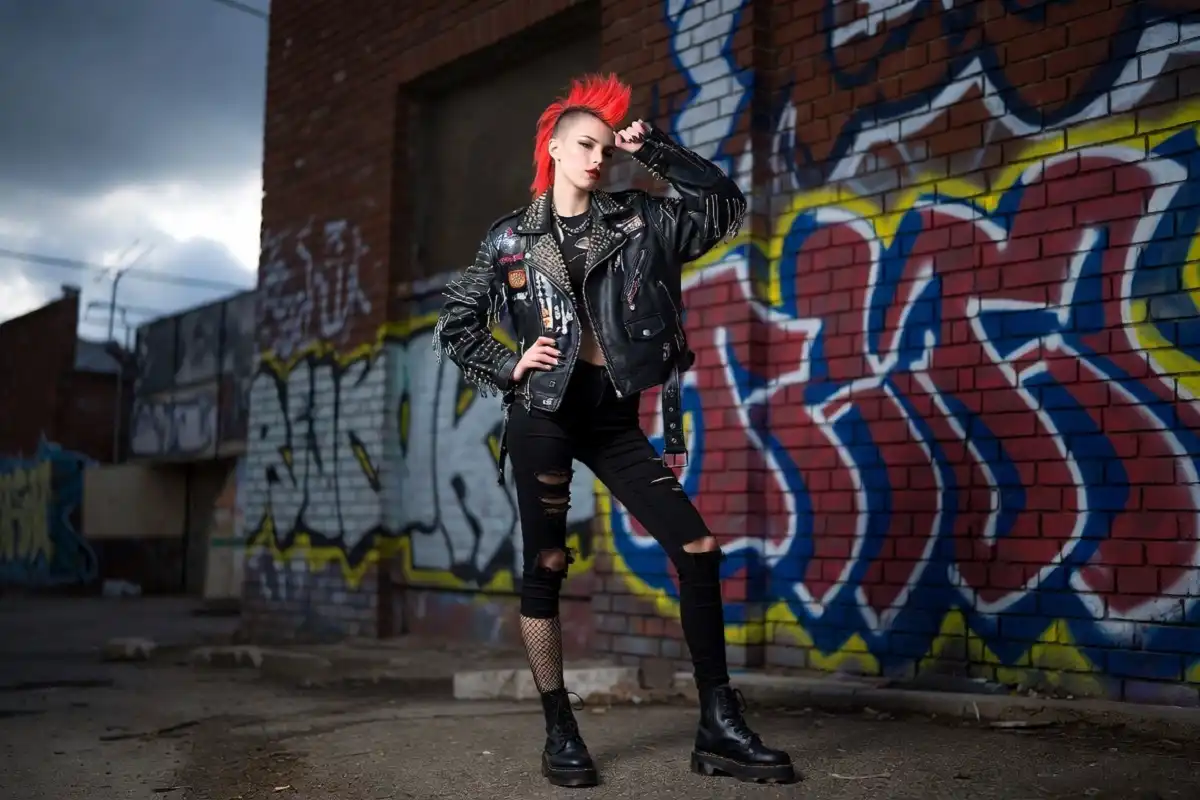
No piece is more central to punk fashion than the leather jacket — typically black, adorned with band patches, metal studs, hand-painted slogans, and safety pins. The more personalized, the better.
How to style it: Wear over a ripped band tee, dark skinny jeans or tartan trousers, and combat boots. Add patches from bands you actually love — authenticity matters in punk more than in almost any other style.
Band Tees and Graphic Shirts
The band tee is both a fashion statement and a loyalty declaration. Classic punk tees feature bold, often disturbing or anarchic graphics — band names in aggressive typography, skulls, slogans, and provocative imagery.
DIY customization is essential: cut the sleeves off, slash the collar, bleach-splatter the fabric, or stencil your own message across the chest. Punk fashion was built by people who couldn’t afford to buy a look — they made it.
Ripped Denim
Distressed, torn, and safety-pinned denim — jeans, jackets, skirts — is a punk staple. Skinny black jeans with strategic rips are the most versatile punk lower half. Pair with a studded belt in a contrasting size — oversized or extremely slim both work equally well.
Combat Boots and Doc Martens
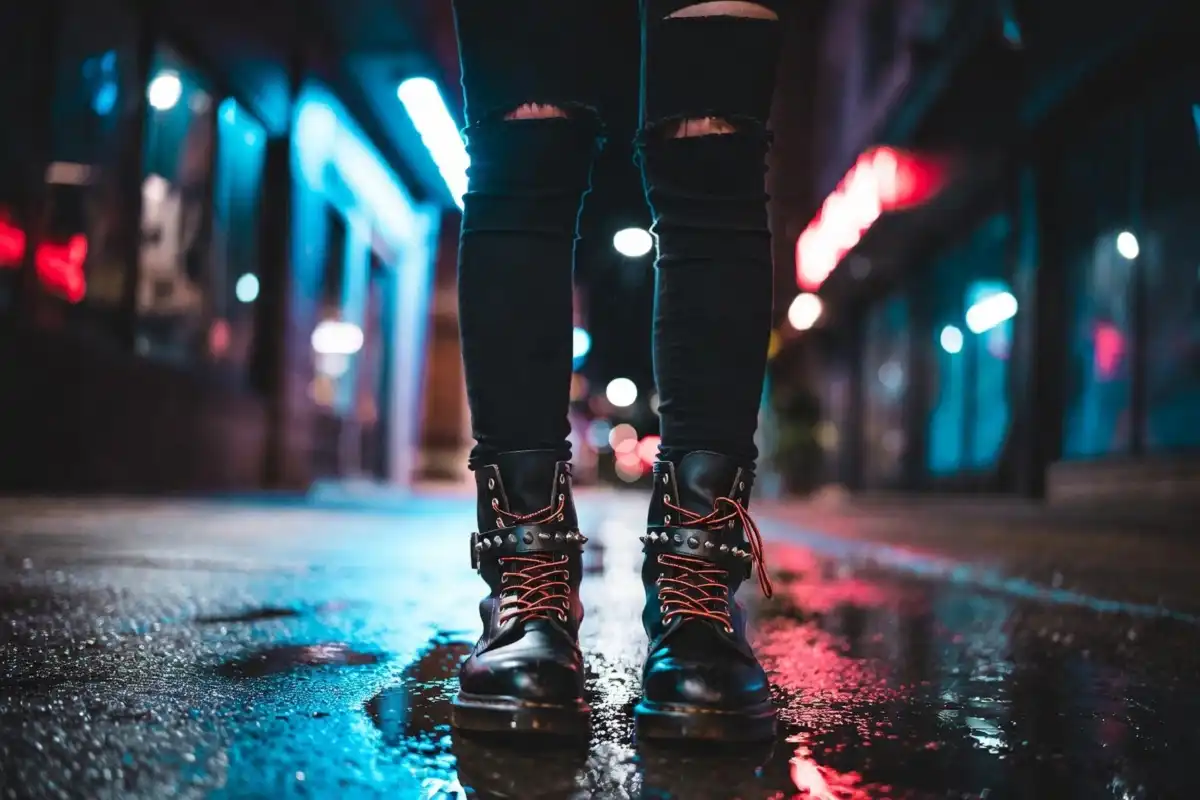
Footwear in punk fashion is built for durability and attitude. Black leather combat boots, Doc Martens (particularly the 1460 8-eye boot), and creepers are the dominant choices. Platform soles add visual drama without sacrificing the tough, functional feel of the silhouette.
Tartan and Plaid
Originally borrowed from Scottish working-class and military associations, tartan became a punk fashion signature — worn as bondage trousers, kilts, skirts, and shirts. Red-black and black-white tartan are the most iconically punk combinations.
Fishnet and Mesh
Fishnet stockings, gloves, and tops layered under ripped clothing gave punk fashion a confrontational edge borrowed from fetish and performance aesthetics. In modern punk styling, mesh tops and fishnet layering remain a go-to technique.
Hardware: Studs, Chains, and Safety Pins
Punk fashion is loaded with metal. Studded belts, spiked bracelets, chain necklaces, safety pin jewelry, and septum rings all contribute to the aesthetic’s visual weight. Nothing should look too polished or considered — the rougher the hardware, the better.
Punk Fashion Subgenres and Their Distinct Looks
Punk fashion isn’t monolithic. Different subcultures have evolved distinct visual languages within the broader punk umbrella.
Classic Punk (UK Punk)
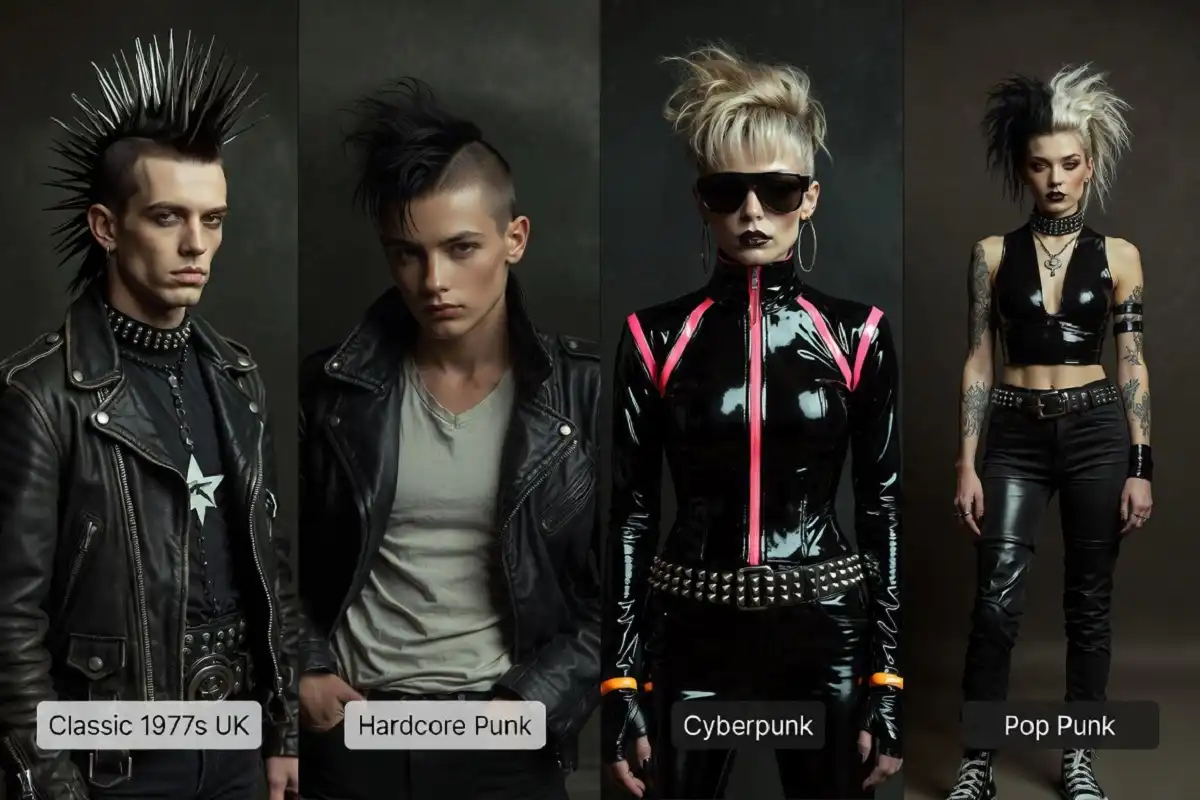
The original aesthetic: leather, studs, mohawks, band tees, torn clothing, heavy boots. Rooted in the Sex Pistols and The Clash era. High-contrast, aggressive, and deliberately provocative.
Hardcore Punk
Minimalist and functional — military surplus, plain white or black tees, shaved heads, canvas sneakers or boots. Less theatrical than classic punk, more raw and utilitarian.
Crust Punk
The most extreme end of the visual spectrum — heavily patched denim jackets (“battle vests”), black metal-influenced imagery, very worn and deliberately unkempt clothing. Dumpster diving and thrifting are core to the authentic crust aesthetic.
Pop Punk
A more accessible, mainstream version of punk fashion — studded belts, Converse, band hoodies, black skinny jeans. Think early 2000s: Sum 41, Blink-182, Good Charlotte. This is the entry point for many people who then go deeper into the aesthetic.
Cyber Punk
Where punk meets futurism — neon accents on black, PVC and latex materials, platform shoes, bold face paint or makeup, LED accessories. A visually striking evolution that takes punk’s DIY ethos into speculative aesthetics.
How to Build a Punk Fashion Wardrobe in 2026
The best punk fashion wardrobe isn’t bought — it’s built, piece by piece, with intention and personal meaning. Here’s a practical roadmap.
Start with a Foundation Leather Jacket
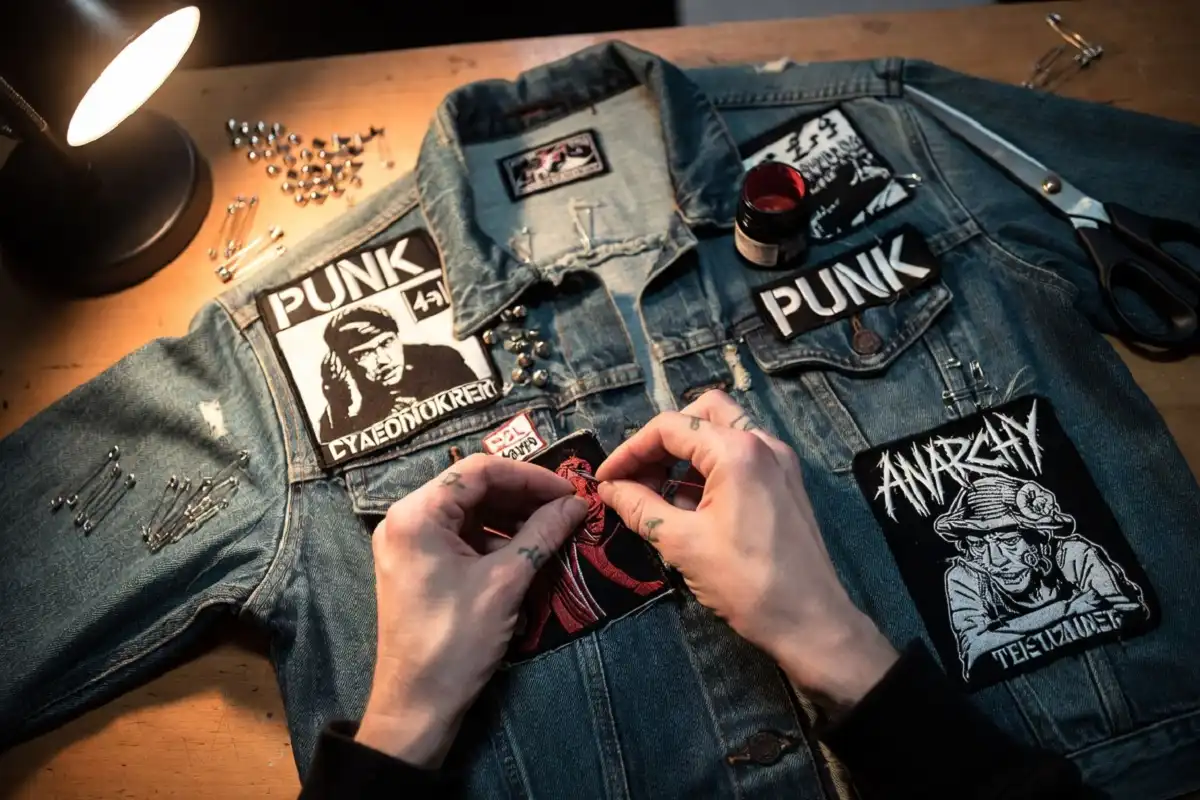
This is the investment piece. Buy secondhand if possible (thrift stores and vintage shops often carry better examples than fast fashion alternatives), then personalize it over time. Every patch, every stud, every safety pin should mean something to you.
Build Around Black
Black is the neutral of punk fashion. Black jeans, black tees, black boots — these form the wardrobe spine. From there, introduce pops of tartan, a band tee with bold color, or a bright dyed hair color for contrast.
Thrift and Customize
Punk was always DIY. Thrift stores are goldmines for raw material: denim jackets to patch up, oversized flannels to slash and bleach, plain tees to customize. Learning basic embroidery and fabric paint skills transforms cheap finds into punk fashion statements.
Invest in Key Footwear
A solid pair of Doc Martens or combat boots will last years and anchor any punk outfit. They’re one of the few places in punk fashion where spending more makes long-term sense.
Add Hardware Gradually
Studded belts, safety pin jewelry, and chain accessories can be built up over time. Look for secondhand pieces or make your own — a leather belt and a pack of metal studs from a craft store creates an instantly punk accessory for a fraction of retail price.
If you’re conscious of building a strong aesthetic without overspending, the approach covered in our frugal male fashion guide applies surprisingly well to punk — since the whole movement was built by people creating style on almost zero budget.
Punk Fashion in 2026: Modern Revival and High Fashion Crossover
Punk fashion has never been fully absent from high fashion — designers from Vivienne Westwood to Alexander McQueen, Moschino, and Balenciaga have consistently drawn from punk’s visual language.
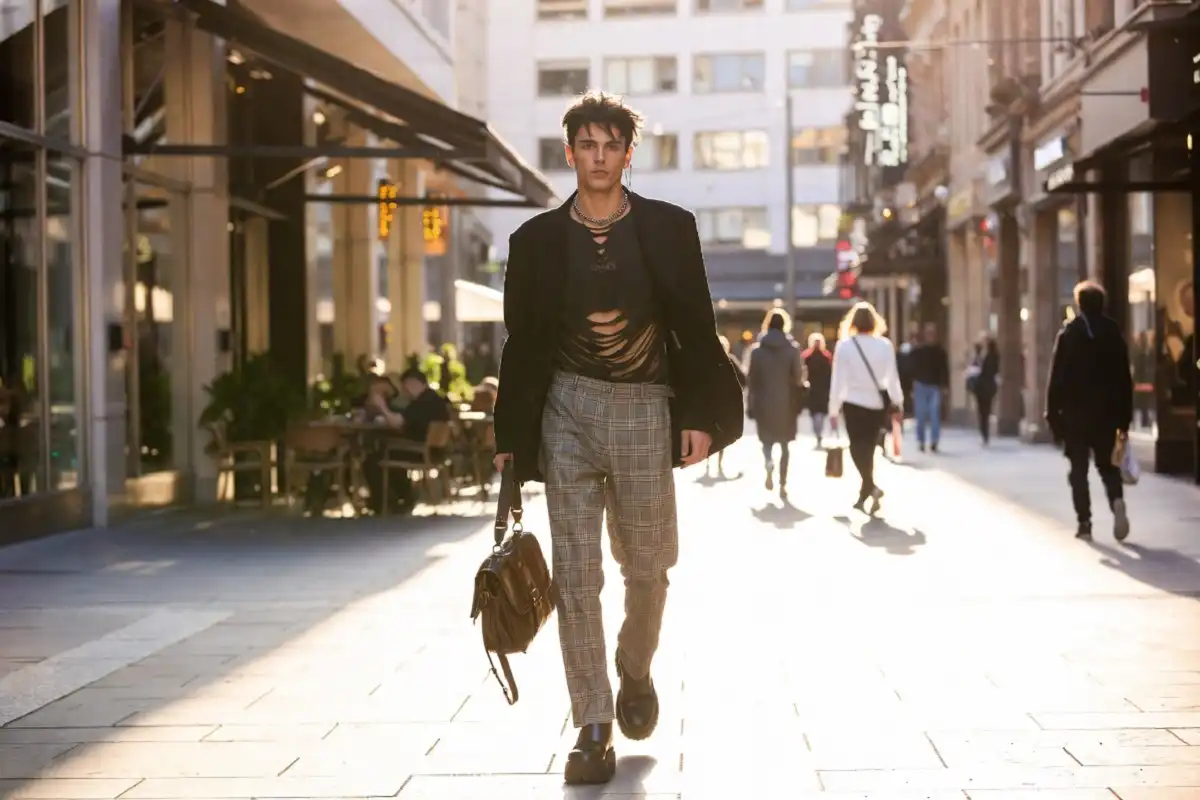
In 2026, punk aesthetics are appearing in several distinct contexts:
- Street style — Safety pins as jewelry, deconstructed tailoring with punk elements, leather jackets paired with elevated pieces
- High fashion — Runway collections featuring studded leather, ripped mesh, and anarchic graphics reimagined in luxury fabrics
- Social media aesthetics — TikTok and Instagram communities centered around punk, goth-punk, and cyber-punk dressing
The crossover between punk fashion and mainstream style is nothing new — for deeper context on how counter-culture aesthetics move into high fashion, our high fashion explainer breaks down how underground visual movements influence the runway over time.
Punk’s influence on men’s fashion specifically runs deep — many of the bold silhouettes and anti-conventional choices that define today’s 80s men’s fashion revival trace directly back to punk’s explosion in that decade.
Punk Fashion for Every Body and Gender
One of punk fashion’s greatest strengths is its radical inclusivity — it has never belonged to one body type, gender presentation, or demographic. Punk actively dismantles fashion’s traditional gatekeeping.
- Oversized silhouettes work as well as fitted — punk isn’t about flattering, it’s about expressing
- Androgynous and gender-fluid dressing has been central to punk since the 1970s
- All body types can rock leather, studs, and combat boots — the attitude is the core piece, not the proportions
Punk fashion’s core message is that you are the designer. The rules exist to be broken.
According to Vogue’s history of punk fashion, the movement fundamentally challenged who got to participate in fashion — democratizing self-expression in a way that still resonates decades later.
FAQ: Punk Fashion
What are the key pieces needed to start a punk fashion wardrobe?
The foundation pieces are: a leather jacket (secondhand and customized is ideal), black skinny or straight-leg jeans, a band tee or plain black tee, combat boots or Doc Martens, and a studded belt. From this base, you build and personalize over time using patches, pins, chains, and DIY customization.
Is punk fashion only for young people?
Absolutely not. Punk fashion has always been about attitude and self-expression, not age. Many of the most iconic figures in punk style — including Vivienne Westwood herself — wore punk aesthetics well into later decades of life. The rebellious spirit that defines punk doesn’t expire.
Can punk fashion be worn in professional or everyday settings?
Yes, with thoughtful curation. “Soft punk” elements — a leather jacket over a plain outfit, a studded accessory, Doc Martens with tailored trousers — translate well into everyday and semi-professional contexts. Full-on punk looks are best saved for social settings where self-expression is the priority.
How is punk fashion different from grunge fashion?
Both are anti-establishment styles, but they differ in origin and visual language. Punk fashion emerged from the 1970s UK and NYC music scenes and is characterized by leather, studs, spikes, and aggressive DIY customization. Grunge fashion came from the early 1990s Seattle music scene and leans toward flannel, oversized knits, and a more “thrown-together” aesthetic. The two share DNA but have distinct visual signatures.
What’s the best way to find authentic punk fashion pieces?
Thrift stores, vintage shops, flea markets, and online secondhand platforms like Depop and eBay are your best sources. Authentic punk fashion was never about buying a prepackaged look — finding raw pieces and customizing them yourself is both more affordable and more true to the spirit of the aesthetic.
Is punk fashion making a comeback in 2026?
Punk fashion never fully disappeared — it simply cycled between underground influence and mainstream visibility. In 2026, there’s a strong revival driven by social media aesthetics, high fashion references, and a cultural appetite for anti-conformist dressing. The core elements of punk — leather, studs, DIY, and bold self-expression — are appearing across street style, runways, and everyday wardrobes worldwide.
Conclusion
Punk fashion is more than a set of clothes — it’s a statement of independence, a refusal to be aesthetically invisible, and one of the most creatively rich traditions in the history of style. From its raw 1970s origins to today’s high-fashion runways and social media feeds, punk has proven itself to be genuinely timeless precisely because it never tried to be.
Build your look with intention. Thrift before you buy. Customize everything. And wear it like you mean it — because in punk fashion, that’s the only way to wear it.
Ready to build your full style toolkit? Explore our guide to 2025–2026 fall fashion trends to see how punk’s anti-establishment energy is shaping the season’s most compelling looks — and find out how to blend rebellion with relevance in your wardrobe right now.