Introduction
Walk down the streets of Tokyo’s Shibuya district in the early 2000s and you would have seen something truly unforgettable — girls with sun-kissed skin, platinum-blonde hair, layers of glittering jewelry, and eyelashes that seemed to defy gravity. That was gyaru fashion at its most electric peak, and even today, decades after its golden era, the style refuses to disappear. If anything, gyaru fashion has found a passionate new generation of followers across the world who are breathing fresh life into one of Japan’s most rebellious and creative subcultures.
Gyaru fashion is not just about clothes. It is a full lifestyle, a form of self-expression, and for many of its devoted followers, a quiet act of defiance against Japan’s deeply conservative social expectations. The term “gyaru” itself comes from the English word “gal,” a transliteration that has long since taken on a meaning entirely its own. Today, gyaru fashion covers a wide universe of substyles, aesthetics, and attitudes — from glamorous princess looks to dark, edgy alternatives — and understanding all of it is what this guide is here to help you do.
Whether you are completely new to the concept or already deep in the rabbit hole of Japanese street fashion, this in-depth guide will walk you through everything: the origins, the evolution, the iconic substyles, the makeup techniques, the fashion codes, and how gyaru fashion is thriving in 2024 and beyond.
What Is Gyaru Fashion? A Full Definition
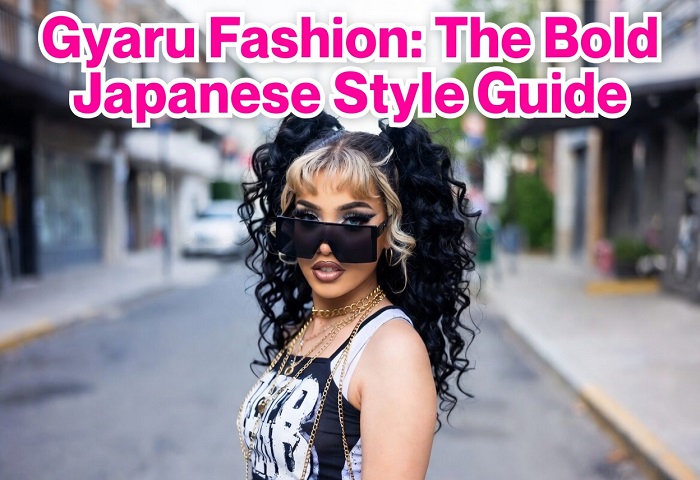
Gyaru fashion is a genre of Japanese street fashion characterized by heavily styled hair, dramatic makeup, bronzed skin, and a bold, glamorous wardrobe that centers around standing out rather than blending in. It emerged from Japanese youth culture in the late 1960s and exploded into mainstream visibility throughout the 1990s and 2000s.
At its core, gyaru is about rejecting the traditional Japanese beauty ideal — pale skin, natural features, understated elegance — and replacing it with something louder, prouder, and unapologetically artificial. False lashes, circle lenses that enlarge the appearance of the eyes, bleached or dyed hair, heavy contouring, and platform shoes are all signature elements that define the gyaru aesthetic.
Gyaru fashion also carries a strong social element. Gals, as practitioners are called, traditionally gathered in friend groups known as gyaru circles or “gyarusa.” These circles would meet in Shibuya — particularly around the famous Shibuya 109 shopping center — to shop, socialize, and refine their looks together. The sense of community has always been as central to the gyaru lifestyle as the clothing itself.
The History of Gyaru Fashion: From Roots to Revolution
The Early Seeds (Late 1960s–1980s)
The earliest roots of gyaru fashion can be traced back to the late 1960s and 1970s, when the term “gal” was first used in Japanese advertising to describe fashionable, carefree young women. Magazines like an·an and non-no helped popularize a Western-influenced casual style among Japanese youth, laying the cultural groundwork for what would come later.
Through the 1980s, Japanese street fashion began fragmenting into distinct subcultures. The economic boom of the era brought wealth, confidence, and a desire among young Japanese women to express themselves in ways that had never been socially acceptable before. This era planted the seeds of what would fully blossom in the 1990s.
The Golden Era (1990s–Early 2000s)
Gyaru fashion hit its undeniable peak in the 1990s. The magazine Egg, first published in 1995, became the Bible of gyaru culture, showcasing the looks, attitudes, and lifestyles of gals across Japan. It was during this period that Shibuya 109 became the holy ground of gyaru fashion, a multi-story shopping mall filled entirely with brands catering to the gyaru aesthetic.
The late 1990s also saw the rise of some of the most extreme gyaru substyles the world had ever seen, most notably ganguro. This radical take on gyaru fashion pushed the deep tan to its absolute limits, with girls applying dark bronze foundation and stark white eyeliner and lip color to create a high-contrast, almost theatrical look. Ganguro was simultaneously celebrated for its audacity and criticized as a rejection of Japanese identity — which, for many of its followers, was precisely the point.
Pop culture played a massive role in amplifying gyaru fashion during this era. Girl groups like Speed and Morning Musume embodied elements of gal style, and the kogal aesthetic — a schoolgirl-inspired substyle featuring short skirts, loose socks, and platform shoes — became closely tied to Japan’s entertainment and music industries.
The Decline and Digital Revival (2010s–Present)
By the early 2010s, gyaru fashion had begun to fade from Japan’s mainstream consciousness. Changing beauty trends, the rise of a more natural “mori girl” and “normcore” aesthetic, and shifts in the entertainment industry all played a role in its decline. Key gyaru magazines, including the beloved Egg, ceased publication.
But gyaru never truly died. A dedicated community of gals kept the flame burning through social media, online forums, and international fan groups. In recent years, gyaru fashion has experienced a genuine cultural revival, driven largely by platforms like TikTok, Instagram, and Pinterest, where younger generations have rediscovered and reinterpreted the style. In 2019, Egg magazine was relaunched online, signaling a renewed appetite for everything gal. Today, gyaru fashion communities thrive globally, from the United States to Brazil to Germany.
The Major Substyles of Gyaru Fashion
One of the most fascinating aspects of gyaru fashion is just how many distinct substyles fall under its umbrella. Each has its own rules, aesthetic codes, and cultural associations. Here is a breakdown of the most important ones.
Kogal (Kogyaru)
Kogal, or kogyaru, is arguably the most famous and widely recognized substyle of gyaru fashion. Popularized in the mid-1990s, kogal takes inspiration from the Japanese high school uniform and gives it an attitude adjustment. Key elements include a shortened school skirt, loose socks (sometimes called “loose socks”), a dyed or highlighted hair, and a casual, confident demeanor.
Kogal was the style that most directly challenged Japanese social norms around youth and femininity. It was associated — sometimes unfairly — with a sense of rebellion and independence, and it dominated the Shibuya scene throughout the late 1990s.
Ganguro
Ganguro is perhaps the most visually extreme substyle within gyaru fashion. The word roughly translates to “face black,” reflecting the heavily tanned skin that defines the look. Ganguro gals pair their deep bronzed complexion with bleached platinum hair, white eye shadow, white lip color, and brightly colored clothing and accessories.
The extreme version of ganguro, known as yamanba or manba, took the aesthetic even further, adding colorful face stickers, bright streaks in the hair, and an almost clown-like application of contrasting whites and colors. Though yamanba peaked in the early 2000s and has largely receded, it remains one of the most discussed and photographed moments in Japanese street fashion history.
Himegyaru (Hime Gyaru)
Himegyaru means “princess gal,” and the style lives up to its name completely. Where other gyaru substyles trend toward casual or flashy, himegyaru is opulent and feminine, drawing inspiration from Rococo fashion, European royalty, and lolita aesthetics. Think voluminous skirts, lace trim, tiaras, pearls, and pastel colors — all delivered with full gyaru-level makeup and hair volume.
Himegyaru reached its peak popularity around 2007 to 2012 and was associated with brands like Jesus Diamante and L’Œil du Chat. It represented a fascinating synthesis of gyaru fashion’s boldness with something far more delicate and theatrical.
Agejo
Agejo gyaru is the sophisticated, nightlife-inspired substyle of gal fashion. Taking its name from the butterfly species and popularized by the magazine Koakuma Ageha, this look is all about club-ready glamour — sequined mini dresses, sky-high heels, voluminous curled hair, and bold evening makeup. Agejo is often associated with hostess culture in Japan and carries a strong sense of sensuality and confidence.
Gyaru-Kei and Rokku Gyaru
Gyaru-kei is a broader term that simply refers to gal-style fashion as a whole category, while rokku gyaru (rock gal) blends gyaru fashion with visual kei and rock aesthetics — darker colors, band merchandise, studs and spikes, and an edgier overall vibe. This substyle appeals to fans of Japanese rock music who still want to maintain the signature gyaru makeup and hair.
Amekaji Gyaru
Amekaji stands for “American casual,” and amekaji gyaru blends the core elements of gyaru fashion with American-inspired casual streetwear: plaid shirts, denim, sneakers, and college-style graphics. It is a more relaxed interpretation of gal style that appealed to gals who wanted something wearable for everyday life without abandoning the gyaru identity.
Gyaru Makeup: The Foundation of the Look
No guide to gyaru fashion would be complete without a deep dive into gyaru makeup, which is as iconic and intricate as any element of the style. Gyaru makeup is dramatic, glamorous, and meticulously applied — its goal is to create the illusion of larger eyes, a more defined face, and an overall look that reads as both polished and bold.
The Eyes
Eyes are the centerpiece of gyaru makeup. False eyelashes — often layered, sometimes with both upper and lower lashes — create the wide, dramatic gaze that is central to the look. Circle lenses, colored contact lenses with an enlarged iris design, make the eyes appear significantly bigger, lending an almost doll-like quality. White or light-colored eyeliner is applied to the waterline to further open up the eye, and detailed lower lash work — whether with individual lashes, eyeliner, or eyeshadow — creates the illusion of a rounder eye shape.
The Skin
Depending on the substyle, gyaru skin can range from deeply bronzed (in the case of ganguro) to porcelain pale (himegyaru) to a warm golden tan (standard gyaru). Most substyles favor a dewy, luminous finish with highlighted cheekbones and a soft blush. Contouring is used to refine the nose and define the cheeks, giving the face a more sculpted appearance.
The Lips
Lips in gyaru fashion are typically full and glossy. Nude to peachy-pink shades are classic for daytime looks, while deeper reds, berries, or even stark whites and purples characterize more extreme substyles like ganguro and rokku gyaru.
The Hair
Hair is just as central to gyaru fashion as makeup. Big, voluminous, and often heavily styled or teased hair is the standard. Bleached blonde, caramel, auburn, and pastel shades are all popular. Curls, waves, and elaborate updos are common across substyles, with himegyaru particularly known for its extraordinary hair volume achieved through layered extensions and backcombing.
Building a Gyaru Fashion Wardrobe
So what do you actually wear to achieve a gyaru look? The answer depends on your chosen substyle, but there are certain staples that recur across the broad spectrum of gyaru fashion.
Key Wardrobe Staples:
Platform shoes and heels are non-negotiable. Whether you lean toward the chunky platform sandals of the early 2000s or modern sky-high boots, height and drama underfoot are signature gyaru traits. Short skirts and dresses are another cornerstone — fitted, flirty, and often adorned with lace, ruffles, or bold prints. Layering jewelry is essential: rings on every finger, multiple necklaces, charm bracelets, and dangling earrings are all fair game.
Outerwear in gyaru fashion tends to be statement-making — faux fur, bold colors, oversized silhouettes, or heavily embellished jackets. Bags are often large and logo-heavy, or alternatively tiny and jeweled, depending on the vibe. Layered tops — crop tops over fitted turtlenecks, or oversized graphic tees belted at the waist — show up frequently in amekaji and rokku gyaru looks.
When building your gyaru fashion wardrobe, it helps to start with one substyle and build from there. Trying to merge multiple aesthetics at once can dilute the look. Consistency of vision — right down to accessories and nail art — is what separates a well-executed gyaru look from a vague approximation of one.
Gyaru Fashion Around the World
One of the most exciting developments in the story of gyaru fashion is its globalization. While it was born in Japan and remains deeply rooted in Japanese street culture, gyaru fashion communities now exist on every continent.
International gals have formed their own circles, run YouTube channels and Instagram accounts dedicated to the style, and organized meet-ups in cities from London to São Paulo to Los Angeles. Non-Japanese gals have also contributed to expanding and evolving the style, introducing new influences and making gyaru fashion genuinely multicultural.
This global expansion has not come without debate. Discussions around cultural appreciation versus appropriation are ongoing within the community, and many Japanese gals and scholars of Japanese street fashion have weighed in with varying perspectives. The consensus that tends to emerge is that engagement done with genuine knowledge, respect, and a real investment in learning the style’s history is a positive force for keeping the culture alive.
Gyaru Fashion in 2024 and Beyond
Today, gyaru fashion occupies a fascinating position — simultaneously retro and fresh, nostalgic and forward-looking. The current revival is driven by a combination of Y2K nostalgia (which has pushed early-2000s aesthetics broadly back into cultural relevance), social media visibility, and a genuine appreciation for the craftsmanship and artistry involved in creating a full gal look.
New gyaru magazines and content creators have emerged across Japan and internationally. Brands associated with classic gyaru fashion, including some that went dormant during the 2010s, are revisiting their archives and releasing new collections. Cosplayers, fashion enthusiasts, and J-fashion lovers are all finding their way to gyaru fashion as a rich vein of creative possibility.
What is particularly exciting about the modern era of gyaru is that it is arguably more inclusive than ever. The rigidity of some of the original style rules has relaxed, allowing for more individual interpretation while the core spirit — boldness, glamour, self-expression, community — remains completely intact. Gyaru fashion today welcomes people of all genders, backgrounds, and body types, and the result is a subculture that feels genuinely alive and evolving.
Tips for Getting Started with Gyaru Fashion
If you are ready to dip your toes into gyaru fashion, here are some practical starting points.
Research your chosen substyle thoroughly. Gyaru fashion has enough depth that jumping in without a clear direction can be overwhelming. Pick one substyle — perhaps classic kogal or modern himegyaru — and immerse yourself in its history, key brands, and visual references before building your look.
Invest in quality makeup tools. Since gyaru makeup is so central to the aesthetic, good tools make a real difference. A quality lash adhesive, a range of false lash styles, circle lens appropriate for your prescription or in plano, and a reliable setting spray will all serve you well.
Join the community. Whether through Reddit forums, Discord servers, or Instagram hashtags, the global gyaru fashion community is generous with knowledge and encouragement. Connecting with other gals — particularly those with more experience — will accelerate your learning curve enormously.
Start small and build gradually. A full, magazine-ready gyaru look takes practice. Start by mastering the eye makeup, then build out your wardrobe and hair styling skills over time. The journey is part of the joy of gyaru fashion.
Have fun with it. More than anything, gyaru fashion is about joy, self-expression, and community. There is no final exam and no style police. The goal is to feel powerful, glamorous, and wholly yourself.
Conclusion
Gyaru fashion is one of the most extraordinary subcultures to emerge from the rich ecosystem of Japanese street fashion. It has survived moral panics, cultural shifts, magazine closures, and the relentless churn of trend cycles — and it is still here, louder and more colorful than ever. From the sun-bronzed streets of 1990s Shibuya to the TikTok feeds of today, gyaru fashion continues to evolve, inspire, and empower everyone who embraces it.
Whether you are drawn to the extreme glamour of agejo, the princesscore fantasy of himegyaru, the dark edge of rokku gyaru, or the casual cool of amekaji, there is a place for you in this world. Gyaru fashion has always been, at its heart, a celebration of individuality dressed up in sequins, false lashes, and miles of bleached hair. And that, in any era, is a beautiful thing.